Receivables management explained simply: goals, tasks and process stages

This article explains receivables management explained simply: goals, tasks and process stages in the context of German receivables management. It is written for companies, self-employed professionals, accounts receivable teams and creditors that need a clear, documented next step. Fortis Inkasso GmbH & Co. KG can support professional debt collection processes; the article does not replace case-specific legal advice.
Starting point: Goals, tasks and process stages
When an invoice is not settled as agreed, the first week shapes everything that follows. The focus of this article is one specific point: Goals, tasks and process stages. A structured approach here noticeably shortens the time amounts stay open and creates the basis for any later escalation. This care costs minutes and saves days if the matter is ever disputed.
A uniform starting point for every case helps: same checks, same order, same filing. That makes processing predictable and the results comparable. Effective receivables management combines prevention before the due date with consistent escalation after it. The earlier this point is clarified, the less time enforcement costs later.
Requirements and documents
Before escalating receivables management, the file has to be complete. That includes the contract or order confirmation, the invoice with all mandatory details, proof of delivery or performance and the full correspondence. If one element is missing, the evidential position shifts quickly against the creditor. A fixed cycle is more effective than a review that only happens when someone asks for it.
Correct master data matters just as much: full company name, legal form, register number and a deliverable address. Even small discrepancies lead to queries later, or to a payment order that cannot be served. In receivables management, a documented standard process pays off more than a chain of individual decisions. In concrete terms this comes back to one point: Goals, tasks and process stages.
Step-by-step approach
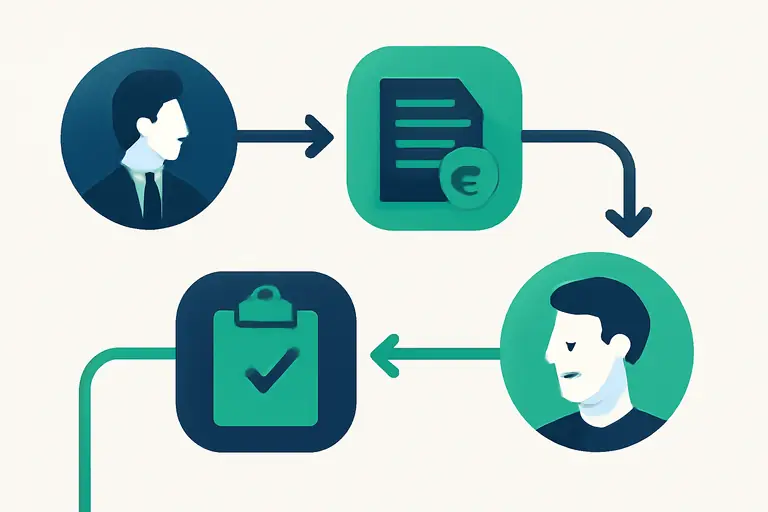
The sequence breaks down into clear stages. Step one: check the due date and whether default has occurred. Step two: send a written reminder with a calendar deadline. Step three: quantify default interest and recovery costs. Step four: escalate as soon as the deadline passes without result. Small improvements here work through the entire receivables portfolio.
Every stage needs a date, a channel and an owner. Follow-up dates are stored in the system so that no deadline lapses and no case is left sitting. KPIs such as DSO and the overdue share make the effect of process changes visible. The effort is one-off; the benefit repeats with every case.
Common mistakes and risks
The common sources of error are quickly named: reacting too late, undocumented agreements, instalment plans without written confirmation, and assuming a phone call replaces a formal reminder. None of these is legally complex; all of them cost time. What counts is less the perfect solution than one that is actually applied day to day.
Equally critical: receivables left unmentioned out of consideration for the customer relationship. The amount does not disappear, but the default risk rises. A short written procedure is followed in daily practice more reliably than an extensive manual. Translated into practice this means: Goals, tasks and process stages.
When Fortis can be involved
Not every case belongs outside the company immediately. Handover is sensible when deadlines and contact attempts are exhausted, the amount justifies the effort and the documents are complete. Fortis Inkasso operates as a registered collection service provider. Standardisation reduces effort here far more than additional checking does.
Cooperation can be limited to individual cases or set up as an ongoing process. Which variant fits depends on volume and on internal capacity. An annual review of whether the defined stages still fit the customer base is worthwhile. What is prepared properly at this stage shortens every subsequent step.