Receivables management automation: which tasks are truly suitable

This article explains receivables management automation: which tasks are truly suitable in the context of German receivables management. It is written for companies, self-employed professionals, accounts receivable teams and creditors that need a clear, documented next step. Fortis Inkasso GmbH & Co. KG can support professional debt collection processes; the article does not replace case-specific legal advice.
Target operating model and KPIs
A target picture makes receivables management measurable. The central KPIs are DSO, the share of overdue items by age bracket, the average days in default, the success rate per dunning level and the write-off rate. Without these figures, any improvement remains an assertion.
Every KPI needs a target value, an owner and a trigger for action. A rise in DSO beyond a defined threshold should automatically prompt a review. A short written procedure is followed in daily practice more reliably than an extensive manual. Standardisation reduces effort here far more than additional checking does.
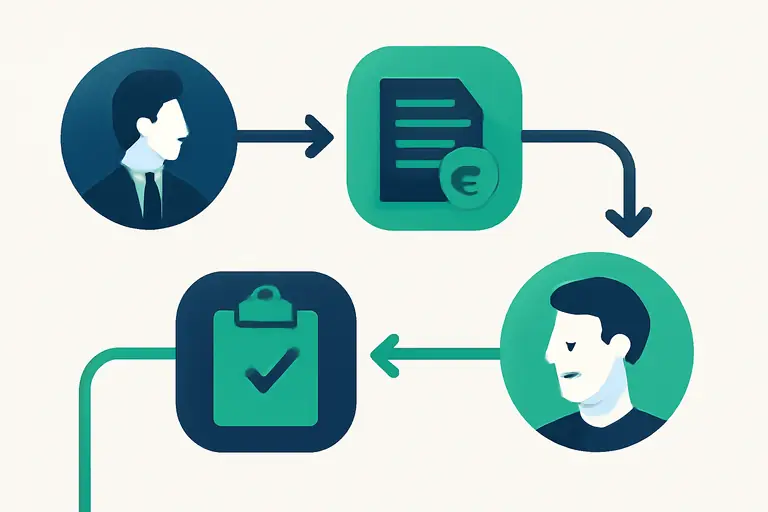
Process and responsibilities
Clear responsibilities prevent friction between sales, accounting and legal. Sales knows the customer relationship, accounts receivable knows the payment status, legal knows enforcement. The process has to define who decides when and who escalates.
An escalation matrix based on amount and age of the receivable reduces one-off decisions. Small amounts run automatically, large amounts are reviewed individually. An annual review of whether the defined stages still fit the customer base is worthwhile. Applied to this topic it means: which tasks are truly suitable.
Data and systems
No automated dunning works without clean data. You need unambiguous customer numbers, maintained address and contact data, correct payment terms in the master record and automatic matching of bank transactions against open items.
An export in a clearly defined format is essential as soon as cases are handed to a service provider. An interface or a structured CSV file is far superior to a manual collection of documents. Effective receivables management combines prevention before the due date with consistent escalation after it. That keeps the case understandable for colleagues with no prior knowledge of it.
Controls and escalation rules
Controls ensure that defined rules are actually applied. A monthly reconciliation of open items, a sample check on dunning-level compliance and a report on cases that have sat without action longer than agreed all work well.
Four-eyes approval for write-offs and a documented sign-off for instalment plans belong here too. Both protect against silent receivable losses. In receivables management, a documented standard process pays off more than a chain of individual decisions. The thematic core stays the same: which tasks are truly suitable.
30-/90-day implementation
The first 30 days are about transparency: structure open items by age, clean up master data, name the owners and document the current dunning deadlines. The goal is a reliable baseline, not a perfect system.
Fine-tuning against the KPIs follows. What demonstrably works is kept; what shows no effect is adjusted. KPIs such as DSO and the overdue share make the effect of process changes visible. In practice, reliability pays off faster than pressure.