Open receivables reconciled with bank transactions: how to avoid apparent receivables

Reviewed: 2026-07-26. “Open receivables reconciled with bank transactions: how to avoid apparent receivables” is not about sending as many reminders as possible; it is about choosing the correct next step. The creditor should first verify the claim, contracting party, performance, due date and payments received. Accurate open-item accounting prevents paid or incorrect balances from being pursued. Only then can the business decide between clarification, debt collection, gerichtliches Mahnverfahren (German court payment-order procedure) or another measure. German law applies.
Mandatory fields in an open-item list
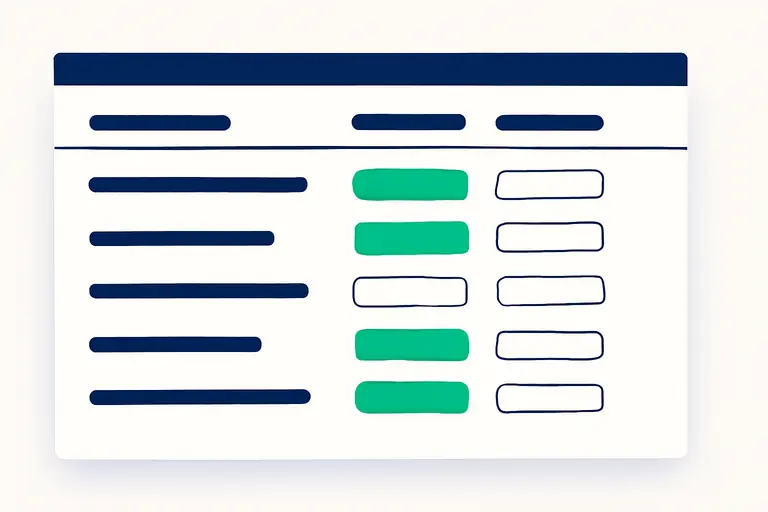
A reliable open-item list should include customer number, legal name, invoice number, invoice and due dates, original amount, open principal, payments, credits, interest, dispute status, reminder stage, owner and next action. Unique IDs prevent duplicates. Free text should be limited and structured; important legal or performance information belongs in defined fields or documents. Status values need clear meanings so that "under clarification" does not become a permanent storage category for unattended cases. For the specific issue “how to avoid apparent receivables”, this requirement should be recorded in the review note with its date and supporting evidence.
To ensure that “how to avoid apparent receivables” is more than a headline, the file should evidence the decisive conditions with dates and sources. Unclear points should be logged as open review items rather than replaced by assumptions. In “how to avoid apparent receivables”, this control determines whether the standard workflow applies or an individual review is required.
Reconcile bank entries, customer ledgers and credits
Before a reminder is sent, incoming payments, bulk transfers, returned debits, discounts, credit notes and set-offs should be reconciled with the customer ledger. Unidentified payments belong on a separate working list with an owner and clarification deadline. Automated matching may use amount, reference, IBAN, invoice number and tolerances, but exceptions must remain visible. A supposedly open claim should not be handed to collection while a plausible payment or credit remains unchecked. The reconciliation should record date and outcome. For “how to avoid apparent receivables”, the workflow should continue only after ownership, deadline and the exception route are clearly set in the system.
Operationally, this review point needs a named owner and a fixed deadline. The result should be stored with references to the evidence so that accounting, sales, legal and the external service provider work from the same facts. For “how to avoid apparent receivables”, quality control should reconcile the balance and underlying entries once more against the original evidence.
Year-end, impairment and documentation
At the reporting date, subledger, general ledger, bank and open-item list should be reconciled. Disputed, overdue or insolvency-risk receivables are assessed using specific information; individual or general impairments follow the applicable accounting and tax rules. An accounting write-off does not automatically extinguish the civil-law claim. The decision, estimate, security, post-balance-sheet payments and further recovery steps should be documented. Accounting and tax treatment should be aligned with the tax adviser or auditor. In “how to avoid apparent receivables”, this control determines whether the standard workflow applies or an individual review is required.
For portfolios, the review result should lead directly to a next action: clarification, reminder, Mahnung (German payment reminder), debt collection, gerichtliches Mahnverfahren (German court payment-order procedure) or individual legal review. Each action needs a deadline, channel and stop criterion. The outcome for “how to avoid apparent receivables” should record the current balance, next date, reason for the decision and responsible person. The open-item list should show the current balance, status, owner and next action date for the case.
Master data as the basis for recovery
Incorrect names, legal forms, addresses, email addresses, order references or payment terms cause returned mail and misallocation. Master data should be validated at contracting, versioned when changed and periodically checked against reliable sources. Operational contacts and invoice recipients are not always the legal debtor. Mandatory fields and duplicate rules should apply across systems. Before collection or court action, a final identity check is essential because a title against the wrong person may be useless or vulnerable. For “how to avoid apparent receivables”, quality control should reconcile the balance and underlying entries once more against the original evidence.
Quality control should detect the wrong legal entity, outdated addresses, duplicate invoices, unposted payments and unsupported ancillary claims. These errors weaken enforcement and place unnecessary strain on the customer relationship. For the specific issue “how to avoid apparent receivables”, this requirement should be recorded in the review note with its date and supporting evidence.
Decide whether to pursue, settle or write off
The decision should weigh legal strength, evidence, amount, age, credit risk, asset indicators, cost, limitation, security and strategic importance. An accounting write-off may coexist with continued legal pursuit; conversely, a strong claim may have little economic value where no attachable assets are likely to exist. Settlement offers need a documented minimum and approval. The matrix supports a reasoned case decision rather than replacing it blindly and should be updated when new information emerges. The outcome for “how to avoid apparent receivables” should record the current balance, next date, reason for the decision and responsible person.
Once the claim is coherent, due and sufficiently evidenced, the next escalation stage should be triggered without unnecessary delay. Fortis Inkasso GmbH & Co. KG can handle out-of-court recovery; disputed or procedural issues remain subject to individual legal review. For “how to avoid apparent receivables”, the workflow should continue only after ownership, deadline and the exception route are clearly set in the system.
Sources
Primary sources and official information used in this article.