Receivables management and the new base interest rate: how to update systems for 2026-07-01

Reviewed: 2026-07-26. “Receivables management and the new base interest rate: how to update systems for 2026-07-01” is mainly a matter of data quality, evidence and consistent deadlines. Businesses should separate undisputed payment arrears from genuine clarification cases. The interest rate, start of default and allocation of payments must be calculated separately. This avoids unnecessary escalation without allowing valid receivables to remain inactive. The contract and German law remain decisive.
Current German basic rate from 2026-07-01
The basic rate under section 247 BGB (German Civil Code) has been 1.52% since 2026-07-01; it was previously 1.27%. Statutory default interest is therefore generally 6.52% per year under section 288(1) BGB and 10.52% for payment claims arising from transactions in which no consumer participates under section 288(2) BGB. Contractual arrangements and the actual start of default must be checked separately. For the specific issue “how to update systems for 2026-07-01”, this requirement should be recorded in the review note with its date and supporting evidence.
For the focus “how to update systems for 2026-07-01”, a short review note should record the facts, the rule applied and the legal or data date on which the statement is based. The contract, invoice, evidence of performance and communications should be brought together in one case file. In “how to update systems for 2026-07-01”, this control determines whether the standard workflow applies or an individual review is required.
When default begins under German law
Under section 286 BGB (German Civil Code), default generally requires a due obligation and a reminder sent after the due date. A reminder is unnecessary, for example, where a calendar date for payment was agreed, the debtor seriously and finally refuses payment, or the statutory 30-day rule applies. For consumers, that 30-day rule requires a specific notice in the invoice or payment statement. Default does not arise where the debtor is not responsible for the delay. For “how to update systems for 2026-07-01”, the workflow should continue only after ownership, deadline and the exception route are clearly set in the system.
For recurring cases, use a checklist of mandatory fields and a four-eyes review. A green status should be assigned only when the required evidence is available; otherwise the case should be routed deliberately for clarification. For “how to update systems for 2026-07-01”, quality control should reconcile the balance and underlying entries once more against the original evidence.
Calculate default interest transparently
The standard daily formula is principal multiplied by the annual interest rate multiplied by the number of default days, divided by 365. If the German basic rate changes on 1 January or 1 July, the periods must be calculated separately. Interest does not automatically start on the invoice date; it starts on the legally established date of default. The statement should separately show principal, interest period, rate, days and subtotal. Payments and credit notes must be reflected using their actual value date. In “how to update systems for 2026-07-01”, this control determines whether the standard workflow applies or an individual review is required.
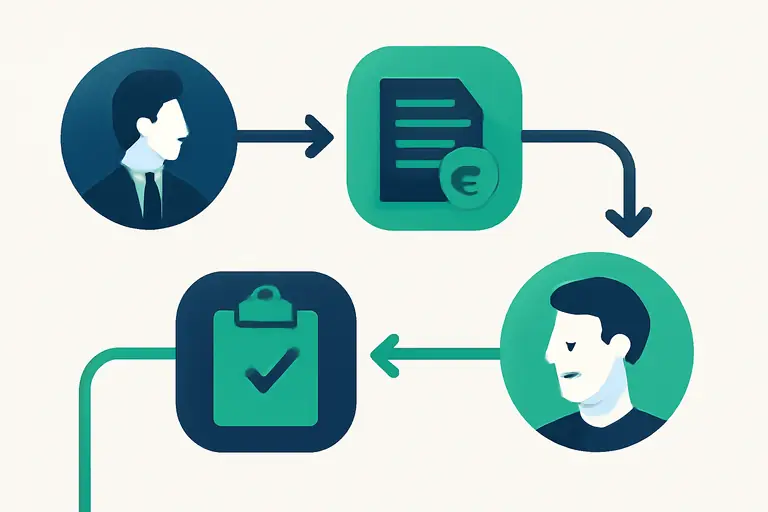
The workflow should move standard cases quickly while automatically routing disputes, insolvency, data-protection or limitation risks out of the standard path. Human review remains necessary where the data or legal position is not clear. The outcome for “how to update systems for 2026-07-01” should record the current balance, next date, reason for the decision and responsible person. Receivables management should automate standard cases while deliberately routing exceptions for review.
Allocate partial payments correctly
Where a payment is insufficient to discharge the entire debt, section 367 BGB (German Civil Code) generally applies unless an effective different allocation governs: costs first, then interest and finally principal. A partial payment therefore does not necessarily reduce the interest-bearing principal immediately. Each entry should record the date, amount, payment reference and allocation sequence used. A different allocation stated by the debtor should not be rebooked without review; its legal effect depends on the circumstances. For “how to update systems for 2026-07-01”, quality control should reconcile the balance and underlying entries once more against the original evidence.
Before escalation, reconcile bank entries, credit notes, returns, partial payments, objections, insolvency signals and limitation dates. An item shown as open in accounting is not automatically due or undisputed; the decision must follow from the complete file. For the specific issue “how to update systems for 2026-07-01”, this requirement should be recorded in the review note with its date and supporting evidence.
Validate the claim before escalation
Before any reminder or handover, the creditor should reconcile the creditor and debtor identities, contract, performance, invoice amount, due date, payments, credit notes and objections. The company name and legal form must match the actual contracting party. For ongoing contracts, termination, term and billing period must be checked. Only the balance remaining after all payments and credits may be pursued. A short internal approval step prevents non-existent claims, duplicate handling and unnecessary costs. The outcome for “how to update systems for 2026-07-01” should record the current balance, next date, reason for the decision and responsible person.
The process ends with a documented decision stating the current balance, next deadline and responsible person. Fortis Inkasso GmbH & Co. KG can then handle suitable undisputed claims out of court, without implying a guarantee of recovery or legal outcome. For “how to update systems for 2026-07-01”, the workflow should continue only after ownership, deadline and the exception route are clearly set in the system.
Sources
Primary sources and official information used in this article.