Receivables management and data protection: roles, access rights and deletion concepts

Reviewed: 2026-07-26. “Receivables management and data protection: roles, access rights and deletion concepts” is mainly a matter of data quality, evidence and consistent deadlines. Businesses should separate undisputed payment arrears from genuine clarification cases. Debt recovery is a lawful business activity, but it does not permit unlimited collection of personal data. This avoids unnecessary escalation without allowing valid receivables to remain inactive. The contract and German law remain decisive.
Lawful basis and data minimisation
Personal data used for debt recovery must be processed for specified and lawful purposes. Depending on the case, relevant bases may include performance of a contract, legitimate interests and the establishment, exercise or defence of legal claims. Only data genuinely needed for identity, the claim, communication, payments and enforcement should be used. Health data and other special categories require a separate legal basis. Access should be role-based, while indiscriminate data collection and unnecessary free-text comments should be avoided. For the specific issue “roles, access rights and deletion concepts”, this requirement should be recorded in the review note with its date and supporting evidence.
For the focus “roles, access rights and deletion concepts”, a short review note should record the facts, the rule applied and the legal or data date on which the statement is based. The contract, invoice, evidence of performance and communications should be brought together in one case file. In “roles, access rights and deletion concepts”, this control determines whether the standard workflow applies or an individual review is required.
Information duties, rights and deletion
Controllers must comply with the information duties in Articles 13 or 14 GDPR and handle requests for access, rectification, restriction or objection in an organised manner. Incorrect debtor data should be corrected without delay. An objection does not automatically extinguish a valid claim, but it requires a legal review of continued processing. Retention periods should be defined by legal basis and document type. Once they expire, data should be deleted or restricted unless an ongoing legal duty or legal claim justifies continued retention. For “roles, access rights and deletion concepts”, the workflow should continue only after ownership, deadline and the exception route are clearly set in the system.
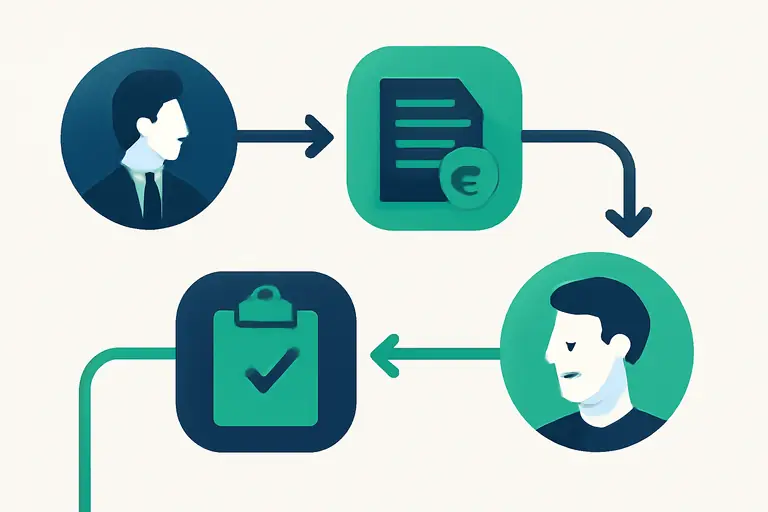
For recurring cases, use a checklist of mandatory fields and a four-eyes review. A green status should be assigned only when the required evidence is available; otherwise the case should be routed deliberately for clarification. For “roles, access rights and deletion concepts”, quality control should reconcile the balance and underlying entries once more against the original evidence.
Master data as the basis for recovery
Incorrect names, legal forms, addresses, email addresses, order references or payment terms cause returned mail and misallocation. Master data should be validated at contracting, versioned when changed and periodically checked against reliable sources. Operational contacts and invoice recipients are not always the legal debtor. Mandatory fields and duplicate rules should apply across systems. Before collection or court action, a final identity check is essential because a title against the wrong person may be useless or vulnerable. In “roles, access rights and deletion concepts”, this control determines whether the standard workflow applies or an individual review is required.
The workflow should move standard cases quickly while automatically routing disputes, insolvency, data-protection or limitation risks out of the standard path. Human review remains necessary where the data or legal position is not clear. The outcome for “roles, access rights and deletion concepts” should record the current balance, next date, reason for the decision and responsible person. Receivables management should automate standard cases while deliberately routing exceptions for review.
Digital handover without breaks in the data chain
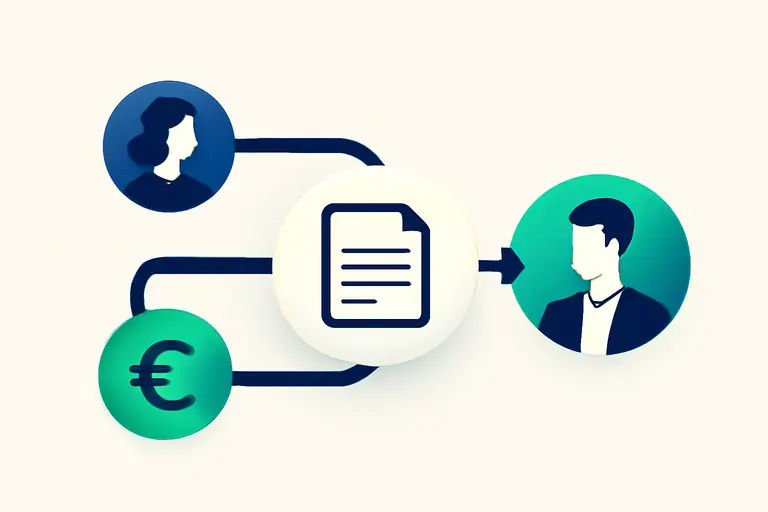
A digital collection handover should include master data, statement of account, contract, invoice, performance evidence, reminders, objections, payments and current contact details. Every file must be clearly linked to the claim. Interfaces are useful for high volume; for smaller portfolios, a well-defined spreadsheet or portal transfer may be sufficient. Mandatory fields, formats, duplicate checks and status feedback should be agreed in advance. Sensitive data should enter the process only through secure channels and role-based access. For “roles, access rights and deletion concepts”, quality control should reconcile the balance and underlying entries once more against the original evidence.
Before escalation, reconcile bank entries, credit notes, returns, partial payments, objections, insolvency signals and limitation dates. An item shown as open in accounting is not automatically due or undisputed; the decision must follow from the complete file. For the specific issue “roles, access rights and deletion concepts”, this requirement should be recorded in the review note with its date and supporting evidence.
Human control and escalation
AI may sort cases, suggest deadlines or prepare standard wording. It should not make unchecked decisions on disputed claims, instalment plans, hardship cases or court action. Businesses need documented rules for data sources, approvals, sampling, error correction and human takeover. Sensitive or contradictory cases belong in manual review. The responsible organisation should be able to explain which data and rules led to a measure and should preserve a practical route for the debtor or customer to reach a competent person. The outcome for “roles, access rights and deletion concepts” should record the current balance, next date, reason for the decision and responsible person.
The process ends with a documented decision stating the current balance, next deadline and responsible person. Fortis Inkasso GmbH & Co. KG can then handle suitable undisputed claims out of court, without implying a guarantee of recovery or legal outcome. For “roles, access rights and deletion concepts”, the workflow should continue only after ownership, deadline and the exception route are clearly set in the system.
Sources
Primary sources and official information used in this article.