Receivables management for SMEs: a lean strategy without a large system

Reviewed: 2026-07-26. “Receivables management for SMEs: a lean strategy without a large system” is mainly a matter of data quality, evidence and consistent deadlines. Businesses should separate undisputed payment arrears from genuine clarification cases. A traceable standard process prevents both unnecessary pressure and avoidable loss. This avoids unnecessary escalation without allowing valid receivables to remain inactive. The contract and German law remain decisive.
Validate the claim before escalation
Before any reminder or handover, the creditor should reconcile the creditor and debtor identities, contract, performance, invoice amount, due date, payments, credit notes and objections. The company name and legal form must match the actual contracting party. For ongoing contracts, termination, term and billing period must be checked. Only the balance remaining after all payments and credits may be pursued. A short internal approval step prevents non-existent claims, duplicate handling and unnecessary costs. For the specific issue “a lean strategy without a large system”, this requirement should be recorded in the review note with its date and supporting evidence.
For the focus “a lean strategy without a large system”, a short review note should record the facts, the rule applied and the legal or data date on which the statement is based. The contract, invoice, evidence of performance and communications should be brought together in one case file. In “a lean strategy without a large system”, this control determines whether the standard workflow applies or an individual review is required.
A reliable workflow after the due date
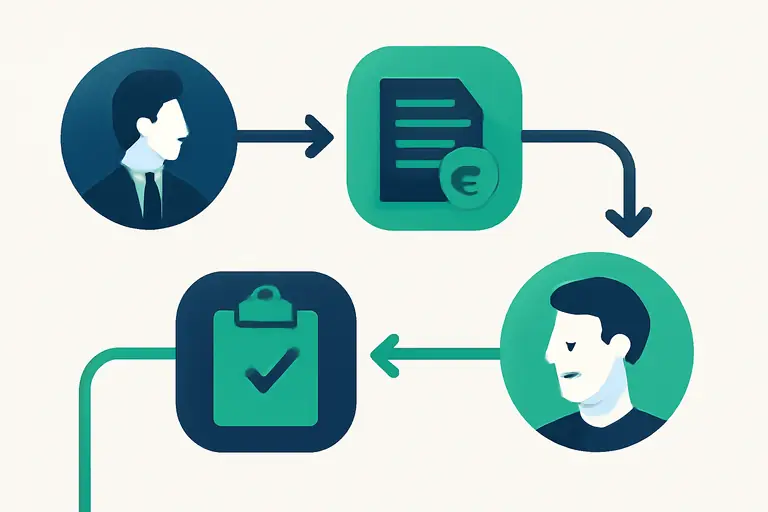
A practical workflow starts with automated due-date monitoring and reconciliation against bank entries, credit notes and clarification cases. Depending on the contract, this is followed by a friendly reminder, a legally clear Mahnung (German payment reminder), a final internal review and handover to debt collection or legal proceedings. Each stage needs an owner, deadline and defined outcome. Rigid standard periods do not fit every case; amount, relationship, dispute status, limitation and default risk determine the pace. For “a lean strategy without a large system”, the workflow should continue only after ownership, deadline and the exception route are clearly set in the system.
For recurring cases, use a checklist of mandatory fields and a four-eyes review. A green status should be assigned only when the required evidence is available; otherwise the case should be routed deliberately for clarification. For “a lean strategy without a large system”, quality control should reconcile the balance and underlying entries once more against the original evidence.
Communicate firmly and customer-focused
Effective payment communication is factual, specific and free from unnecessary pressure. It states the invoice, balance, due date, payment method, contact and clear deadline. It also provides a channel for documented objections and genuine payment difficulties. Courtesy does not mean allowing deadlines to pass without consequence; consistency does not mean threats or public shaming. A uniform tone and a single contact are more likely to preserve the commercial relationship than changing and contradictory messages. In “a lean strategy without a large system”, this control determines whether the standard workflow applies or an individual review is required.
The workflow should move standard cases quickly while automatically routing disputes, insolvency, data-protection or limitation risks out of the standard path. Human review remains necessary where the data or legal position is not clear. The outcome for “a lean strategy without a large system” should record the current balance, next date, reason for the decision and responsible person. Receivables management should automate standard cases while deliberately routing exceptions for review.
Documents for a reliable receivables file
The minimum file should contain the contract or order, invoice, evidence of delivery or performance, agreed payment terms, correspondence, reminder, bank or customer ledger, credit notes and objections. Depending on the case, acceptance records, time sheets, shipping data, termination notices, terms and security may be needed. Documents should be named chronologically and stored without alteration. A short factual summary identifying unresolved points reduces queries and prevents inconsistent information from reaching the debtor, collection provider or court. For “a lean strategy without a large system”, quality control should reconcile the balance and underlying entries once more against the original evidence.
Before escalation, reconcile bank entries, credit notes, returns, partial payments, objections, insolvency signals and limitation dates. An item shown as open in accounting is not automatically due or undisputed; the decision must follow from the complete file. For the specific issue “a lean strategy without a large system”, this requirement should be recorded in the review note with its date and supporting evidence.
Escalate without wasting time
If the debtor does not respond, sending the same message every week is rarely useful. A better escalation rule records contact attempts, states a final deadline, channels objections and triggers the announced measure once the deadline expires. Earlier action may be appropriate for high values, visible financial distress, imminent limitation or a foreign debtor. Threats, unclear additional charges or inconsistent messages from different contacts weaken credibility and evidence instead of improving recovery. The outcome for “a lean strategy without a large system” should record the current balance, next date, reason for the decision and responsible person.
The process ends with a documented decision stating the current balance, next deadline and responsible person. Fortis Inkasso GmbH & Co. KG can then handle suitable undisputed claims out of court, without implying a guarantee of recovery or legal outcome. For “a lean strategy without a large system”, the workflow should continue only after ownership, deadline and the exception route are clearly set in the system.
Sources
Primary sources and official information used in this article.