Receivables management 2026: key trends between digitalization and default risk

Reviewed: 2026-07-26. “Receivables management 2026: key trends between digitalization and default risk” is mainly a matter of data quality, evidence and consistent deadlines. Businesses should separate undisputed payment arrears from genuine clarification cases. In 2026, the main priorities are shorter internal idle time, reliable data and controlled automation. This avoids unnecessary escalation without allowing valid receivables to remain inactive. The contract and German law remain decisive.
Monitor default risks in 2026
In 2026, higher insolvency figures, financing costs, digital invoicing and increasing automation interact. Businesses should not turn this into a blanket crisis forecast but should monitor their own data: payment delay, returned debits, limit breaches, dispute rates and concentration by customer or sector. Current statistics provide external context; the concrete decision comes from the receivables portfolio. Early clarification, shorter internal idle time and reliable evidence are more effective than hurried mass reminders. For the specific issue “key trends between digitalization and default risk”, this requirement should be recorded in the review note with its date and supporting evidence.
For the focus “key trends between digitalization and default risk”, a short review note should record the facts, the rule applied and the legal or data date on which the statement is based. The contract, invoice, evidence of performance and communications should be brought together in one case file. In “key trends between digitalization and default risk”, this control determines whether the standard workflow applies or an individual review is required.
Transitional rules through the end of 2027
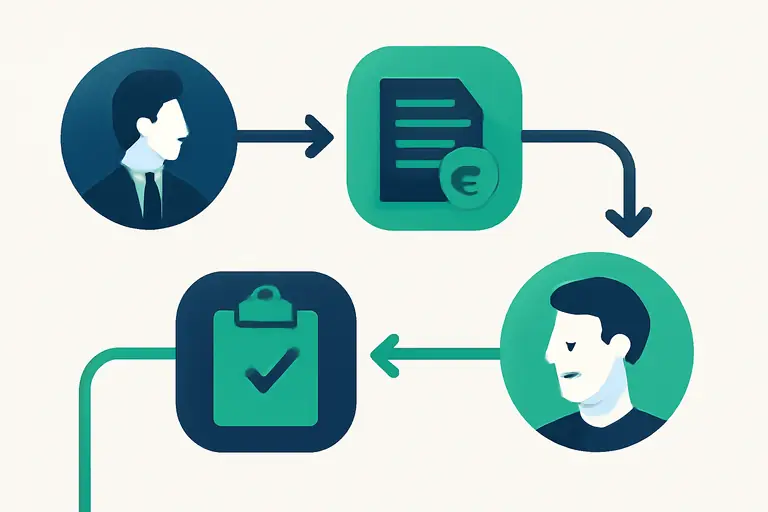
Domestic German businesses have had to be capable of receiving an E-Rechnung since 2025. Transitional rules apply to issuance: through 2026, another form of invoice may generally still be used; where the issuer had prior-year turnover of no more than EUR 800,000, the transition extends through the end of 2027. These transitions must not be confused with the receipt obligation. Businesses should define receipt channels, validation, approval, archiving and transfer to accounting and receivables management. For “key trends between digitalization and default risk”, the workflow should continue only after ownership, deadline and the exception route are clearly set in the system.
For recurring cases, use a checklist of mandatory fields and a four-eyes review. A green status should be assigned only when the required evidence is available; otherwise the case should be routed deliberately for clarification. For “key trends between digitalization and default risk”, quality control should reconcile the balance and underlying entries once more against the original evidence.
Human control and escalation
AI may sort cases, suggest deadlines or prepare standard wording. It should not make unchecked decisions on disputed claims, instalment plans, hardship cases or court action. Businesses need documented rules for data sources, approvals, sampling, error correction and human takeover. Sensitive or contradictory cases belong in manual review. The responsible organisation should be able to explain which data and rules led to a measure and should preserve a practical route for the debtor or customer to reach a competent person. In “key trends between digitalization and default risk”, this control determines whether the standard workflow applies or an individual review is required.
The workflow should move standard cases quickly while automatically routing disputes, insolvency, data-protection or limitation risks out of the standard path. Human review remains necessary where the data or legal position is not clear. The outcome for “key trends between digitalization and default risk” should record the current balance, next date, reason for the decision and responsible person. Receivables management should automate standard cases while deliberately routing exceptions for review.
Interpret DSO and related metrics correctly
Days Sales Outstanding is commonly calculated as average receivables divided by credit sales, multiplied by the number of days in the period. It indicates capital tied up but can be misleading without seasonality, growth, payment terms and sector context. It should be supplemented by the overdue ratio, share over 90 days, dispute rate, promise-to-pay performance and recovery rate. Metrics need consistent definitions and segmentation by customer, country or product. A falling DSO accompanied by higher write-offs would not be a success. For “key trends between digitalization and default risk”, quality control should reconcile the balance and underlying entries once more against the original evidence.
Before escalation, reconcile bank entries, credit notes, returns, partial payments, objections, insolvency signals and limitation dates. An item shown as open in accounting is not automatically due or undisputed; the decision must follow from the complete file. For the specific issue “key trends between digitalization and default risk”, this requirement should be recorded in the review note with its date and supporting evidence.
Responsibilities and escalation rights
Effective receivables management assigns clear roles: sales maintains contract and contact data, operational teams preserve performance evidence, accounting posts and reminds, legal or collection teams assess escalation, and management sets risk limits. Approval thresholds should cover disputes, high values, instalments, write-offs and supply stops. A regular review examines both metrics and individual cases. Shared definitions prevent different departments from handling the same customer with different balances or deadlines. The outcome for “key trends between digitalization and default risk” should record the current balance, next date, reason for the decision and responsible person.
The process ends with a documented decision stating the current balance, next deadline and responsible person. Fortis Inkasso GmbH & Co. KG can then handle suitable undisputed claims out of court, without implying a guarantee of recovery or legal outcome. For “key trends between digitalization and default risk”, the workflow should continue only after ownership, deadline and the exception route are clearly set in the system.
Sources
Primary sources and official information used in this article.